
When municipal sewer systems are unavailable, homeowners and property developers turn to septic systems as a reliable solution. This article explores septic system designs, offering insights into how these essential waste management systems are growing to meet modern needs.
From conventional septic tanks to advanced aerobic systems, this guide will explain various Septic System Options available at Nexgen Septics, helping you understand the key factors in choosing the right septic system for your property. Whether you’re considering a new septic tank installation, upgrading an existing system, or simply curious about the latest advancements in wastewater treatment, this guide will provide valuable information for making informed decisions about your property’s waste management needs.
Best Designs for Septic Systems
Septic systems are underground structures that treat wastewater. Septic systems use natural processes to treat effluent—the liquid waste from your household. Effluent is the waste that flows out of sinks, showers, and toilets and must be treated to avoid environmental pollution.
Key components of a septic system:
- Septic tank: A watertight container where solids settle at the bottom, and lighter materials like oil and grease float to the top.
- Drain field (leach field): The area where effluent is filtered through the soil, removing harmful bacteria, viruses, and nutrients.
- Pump (in some systems): Some systems require pumps to push wastewater to higher elevations or specific locations.
Septic systems are of two types: Conventional Septic Systems and Alternative Septic Systems or Engineered Septic Systems. Both types of systems are equally good and efficient based on the requirements. Let’s explore these two types of systems, and you can make the call to see which one best suits you.
Conventional Septic Systems
Conventional systems are commonly used in residential septic systems. Conventional septic systems use gravity to transport wastewater from your septic tank to the drain field, where it is filtered through soil and naturally treated.
Septic Tank
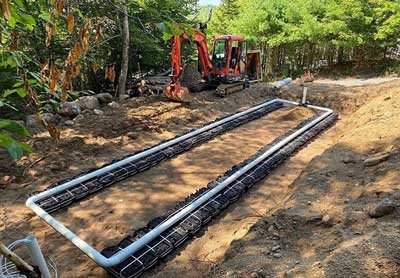 The septic tank is the first stage of treatment in any septic system. A septic tank is a large, watertight underground container made of concrete, fiberglass, steel, or plastic. It holds the wastewater from your home long enough for the solid materials to settle at the bottom, forming sludge. Meanwhile, fats, oils, and grease float to the top creating a scum layer. The liquid in the middle, called effluent, flows out of the tank to the drain field for treatment or dispersal.
Inside the septic tank, anaerobic bacteria break down some of the organic matter in the wastewater. This process reduces the amount of solid waste that needs to be pumped out, but over time, solids accumulate and must be removed to prevent clogs or overflows. If not maintained, the tank can become overwhelmed, leading to system failure.
Conventional System (Gravel/Trench System)
In a conventional system, once the effluent leaves the septic tank, it enters a series of perforated pipes buried in gravel-filled trenches in the drain field. The drain field typically comprises shallow trenches (1-3 feet deep) filled with gravel or stone. These trenches help distribute the effluent evenly across the soil.
As the effluent seeps out of the perforated pipes, it slowly moves through the gravel and into the soil. Here, the soil serves as a natural filter. The soil further treats the wastewater by removing harmful pathogens, bacteria, and nutrients. Microbes in the soil consume organic materials, while the physical structure of the soil helps trap contaminants. Over time, the filtered water percolates down into groundwater supplies, but by this point, most of the harmful substances have been removed.
Conventional systems are ideal for properties with sufficient land area and well-draining soil that allows effluent to filter properly. A conventional septic system design works best in areas with a deep water table and soil that absorbs water at a steady rate. Also, the ability of the soil to absorb and filter the septic system effluent determines the effectiveness of conventional systems, which is why soil testing or soil percolation tests are a critical part of the design process.
Chamber System
The chamber septic system design is an alternative to the conventional gravel/trench system. Instead of using gravel-filled trenches, this system uses large, open-bottomed plastic chambers to hold and distribute the effluent. These chambers are connected in a series, providing an empty space for wastewater to be temporarily stored.
As wastewater enters the chambers from the septic tank, it gradually seeps into the soil below. The open-bottom design of septic chambers allows a larger surface area for effluent absorption. Air can circulate through the chambers, which enhances the microbial activity in the soil. The air also improves the natural breakdown of contaminants. Many call it an Infiltrator Septic System because it uses chambers or other innovative components to enhance wastewater dispersal.
The chamber system design is more compact than conventional systems, making it ideal for properties with limited space. It allows more flexibility in soil conditions and can be installed in areas with higher water tables. The chamber system is also more adaptable to areas where gravel is not readily available, making it easier and more cost-effective to install. It provides improved effluent distribution and allows for better treatment in challenging conditions.
What is the difference between a Chamber Septic System vs Conventional one?
Chamber systems provide more efficient distribution of wastewater. The chamber system can be more cost-effective and easier to install than conventional systems with gravel and pipe drain fields.
Are Septic Leach Field Chambers different from Septic Tank Leaching Chambers?
The terms “Septic Leach Field Chambers” and “Septic Tank Leaching Chamber” refer to similar concepts but are used in slightly different contexts:
- Septic Leach Field Chambers: These are components of chamber systems within the leach field where wastewater from the septic tank is distributed. They are part of the overall system that assists the soil to absorb and filter the treated wastewater.
- Septic Tank Leaching Chamber: This specifically refers to the chamber connected directly to the septic tank, which allows the treated wastewater to flow from the tank into the leach field. It is a specific type of leach field chamber designed to handle the transition of wastewater from the tank to the soil.
Alternative Septic Systems or Engineered Septic Systems
Alternative septic systems address site-specific challenges such as poor soil drainage, limited space, or high groundwater levels. These non-conventional septic systems use additional treatment processes or specialized designs to improve wastewater management and meet environmental standards.
1.) Mound Septic System Design
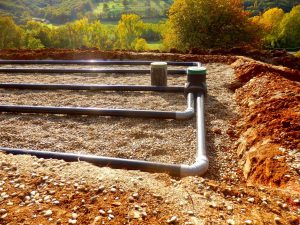 A mound system is an above-ground alternative used when the soil is too shallow or poorly drained for a conventional drain field. In mound septic systems, a raised mound of sand and gravel is constructed on top of the existing soil, creating an artificial drain field.
The liquid waste or effluent from the septic tank is pumped into a distribution system located at the top of the mound. As the effluent moves through the mound, it filters through layers of sand and gravel. These materials help break down contaminants in the wastewater before it reaches the underlying soil.
The layered sand and gravel act as a physical filter, trapping and neutralizing harmful bacteria, viruses, and organic matter. The soil at the base of the mound provides additional filtration, further treating the effluent before it enters the groundwater. Microorganisms in the soil layer break down organic waste and consume pathogens.
A mound system is a non-conventional septic system ideal for properties with shallow bedrock, clay-rich soils, or areas where the groundwater level is too high for a conventional system. Mound systems provide effective treatment in areas with poor soil drainage or insufficient soil depth for a traditional drain field.
Types of Mound Septic System:
- Mound System Design: A raised bed system where the septic drain field is elevated to allow for proper filtration in areas with shallow soil depth or high water tables.
- Sand Mound Septic System Design: A type of mound system that incorporates a sand filter to provide additional treatment to wastewater before it enters the drain field.
2.) Sand Filter Septic System Design
In a typical Sand Filter Septic System, effluent from the septic tank is filtered through a bed of sand before being distributed to the drain field or another disposal system. It is a single-pass system, meaning the effluent passes through the sand filter once before being released. The sand provides physical filtration.
The sand filter removes suspended solids and pathogens from the effluent by trapping them in the sand particles. Microbial activity within the sand helps break down organic matter and neutralize harmful bacteria and viruses. The treated effluent that exits the sand filter is of much higher quality than effluent treated by conventional systems alone.
Sand filter systems are ideal for properties with poor soil quality or where additional treatment is required before wastewater can be safely released into the environment. Sand filter systems are commonly used in areas with sensitive ecosystems, such as near lakes, rivers, or wetlands, where higher levels of wastewater disposal and treatment are essential.
3.) Recirculating Sand Filter System Design
A Recirculating Sand Filter System (RSF) is a more advanced and efficient variation of the standard sand filter system. In this design, the wastewater is recycled and filtered multiple times through the sand bed to achieve a higher level of treatment.
The effluent from the septic tank enters the sand filter, but instead of flowing directly to the drain field after one pass, a portion of the treated effluent is recirculated back to the septic tank or another part of the system to go through the filtration process again. This septic system design allows for more thorough treatment.
The recirculating design is especially beneficial for areas where higher levels of treatment are required, such as areas with environmentally sensitive conditions (e.g., near water bodies or in areas with restrictive soil conditions). The recirculation provides enhanced removal of pathogens and nutrients, improving overall wastewater quality.
4.) Aerobic Septic System Design
An Aerobic Treatment Unit (ATU) is an advanced system design that injects oxygen into the wastewater treatment process. Adding oxygen accelerates the breakdown of organic matter through the growth of aerobic bacteria, which are more efficient than the anaerobic bacteria found in conventional septic systems.
This septic system design includes multiple compartments or tanks that work in stages. The first tank collects and settles solids, while the second tank introduces air, typically via an electric pump, to promote aerobic bacterial activity that breaks down the organic waste thoroughly.
After the effluent has been treated with oxygen, it passes through additional chambers for further filtration before being released into the drain field. This enhanced level of treatment ensures that the effluent leaving the system is much cleaner and can be safely discharged into areas. ATUs can be used in areas with sensitive ecosystems, near bodies of water, or where soil conditions require a higher level of effluent treatment.
However, the design of ATUs requires more maintenance than conventional systems. Since they rely on mechanical components like air pumps or blowers to introduce oxygen, they need regular inspections to ensure all parts are working properly. Additionally, the requirement for electricity adds to the overall cost of operation, both in terms of installation and ongoing expenses. While more expensive, ATUs are ideal for properties with high water tables, poor soil conditions, or environmentally sensitive locations that require cleaner septic system effluent.
5.) Drip Distribution System
A drip distribution system uses a network of small, flexible pipes to slowly release treated wastewater into shallow soil layers.
In the drip distribution system, effluent from the septic tank is pre-treated before being pumped into narrow, flexible tubing buried just below the soil surface. The effluent is released in controlled doses through small emitters along the pipes. This slow and steady dispersal allows the effluent to be absorbed and treated by the upper layers of soil, where oxygen is present to support microbial activity.
As the effluent seeps through the shallow soil, microorganisms in the oxygen-rich topsoil help break down harmful bacteria, pathogens, and nutrients. This process ensures that the wastewater is sufficiently treated before it reaches deeper soil layers or groundwater.
Drip distribution systems are suitable for properties with sloped terrain, small lot sizes, or areas with compacted or less permeable soils. This septic system design offers a flexible solution for challenging landscapes, ensuring that effluent is distributed evenly across the property for proper treatment.
6.) Cluster/Community System
A Cluster or Community System is a shared wastewater treatment solution designed to serve multiple homes or properties. These systems collect wastewater from several households and place it in a central treatment facility, which can be designed similarly to a large septic system or a more advanced treatment plant.
After collection, the wastewater is treated either through conventional anaerobic methods or, in more advanced designs, with technologies such as sand filters or aerobic treatment units. Once treated, the effluent is dispersed into a shared drain field or released into the environment if it meets regulatory standards.
The design of a cluster system typically involves a network of sewer lines that transport wastewater from each property to a central tank or treatment facility. This facility may include septic tanks, pumps, or treatment units to process the wastewater before it reaches the drain field. The treated effluent is often dispersed over a large area of land, allowing for efficient absorption and filtration by the soil.
The cluster septic system design can be cost-effective and space-efficient, especially in areas where individual septic systems are not practical. Cluster systems are ideal for small communities, subdivisions, or rural areas where property sizes may be too small for individual septic systems or where soil conditions are not favorable for multiple drain fields.
7.) Evapotranspiration System
An Evapotranspiration System is a type of septic system designed to dispose of effluent through the combined processes of evaporation and plant uptake. This system is particularly effective in arid or semi-arid climates where conventional septic systems may not work efficiently due to poor soil permeability or shallow groundwater tables.
The key to this system is that it doesn’t rely on the soil to filter and absorb the wastewater but instead uses natural evaporation and transpiration (the release of water from plants) to remove the liquid portion of the effluent.
The evapotranspiration system design involves a sealed drain field, essentially a shallow basin lined with an impenetrable material, like plastic, to prevent effluent from seeping into the ground. The effluent from the septic tank is pumped into this basin, where it is exposed to the sun and air, allowing it to evaporate. The basin is usually planted with vegetation, such as grasses or specific plants that thrive in wet conditions. These plants absorb the water through their roots. They then release it into the atmosphere through transpiration.
The evapotranspiration system ensures that very little wastewater infiltrates the soil, making it suitable for areas where groundwater contamination is a concern. Evapotranspiration systems are not suitable for areas with high rainfall or cold climates, where evaporation rates are lower.
8.) Constructed Wetland System
A Constructed Wetland System mimics the natural filtration processes of a wetland to treat wastewater. In this septic system design, effluent flows through a shallow bed filled with plants, soil, and gravel, where it undergoes both physical and biological treatment.
The design of a constructed wetland system closely resembles a natural wetland ecosystem, where plants and microorganisms work together to break down contaminants, remove nutrients, and filter out suspended solids. The Constructed Wetland Systems are designed to replicate the functions of natural wetlands, which are known for their ability to clean water.
The design of a constructed wetland system typically includes a lined bed filled with layers of sand, gravel, and soil. From the septic tank, effluent flows into the wetland bed, moving slowly through the wetland plants’ root zone. These plants, along with the microbes in the soil, help remove organic matter, nitrogen, and pathogens from the wastewater. The plants in the wetland take up nutrients and provide oxygen to the root zone, which supports aerobic bacterial activity. After the effluent passes through the wetland, it may be further treated or released into a drain field or surface water.
Wastewater treatment in a constructed wetland is highly effective because it combines several treatment processes: sedimentation, filtration, biological breakdown, and plant uptake. The system is ideal for properties with poor soil conditions or environmentally sensitive areas, such as near bodies of water, where enhanced effluent treatment is required to prevent pollution.
9.) Eljen GSF Geotextile Sand Filter
The Eljen Geotextile Sand Filter (GSF) system is an alternative advanced septic system. It integrates both treatment and dispersal processes, offering a higher level of wastewater treatment. It combines elements of sand filtration and enhanced aerobic bacterial treatment, making it a hybrid of aerobic treatment and sand filter systems.
How the Eljen GSF System Works
The Eljen GSF system uses geotextile fabric and a plastic core to increase surface area for aerobic bacteria growth. The system is composed of two main zones:
- Primary Treatment Zone: This includes the GSF Module, which consists of a plastic core wrapped in geotextile fabric. The septic tank’s effluent is distributed into the GSF Module through perforated pipes. The geotextile fabric and the open-air channels inside the module create an oxygen-rich environment, allowing aerobic bacteria to thrive. These bacteria actively break down contaminants and nutrients, treating the effluent biologically before it moves to the next stage.
- Secondary Treatment Zone: Beneath the GSF Module is a layer of Specified Sand, which is engineered to allow unsaturated flow, promoting additional filtration. As the effluent percolates through the sand, any remaining contaminants are further broken down by bacteria in the sand layer. The treated effluent then infiltrates into the surrounding native soil, where it undergoes final treatment before recharging the groundwater.
Wastewater Treatment Process
The GSF system provides integrated treatment and dispersal of wastewater. The key feature is the large surface area provided by the geotextile fabric, which enhances the growth of aerobic bacteria. The design ensures that effluent is treated biologically before reaching the sand layer, where additional physical and biological filtration occurs. The sand layer plays a dual role, both as a filter and as a medium for further bacterial activity, ensuring that the effluent is treated effectively before it enters the native soil and, ultimately, the groundwater.
The Eljen GSF system is ideal for properties with poor soil conditions or limited space. Its design allows for better effluent distribution. It is also suitable for areas where higher levels of effluent treatment are required due to environmental regulations or proximity to sensitive ecosystems. The system is lightweight, flexible in installation, and requires less land area compared to conventional septic systems, making it a good option for sites with challenging topography or where minimizing site disruption is important.
10.) Engineered Systems Design
An Engineered Septic System Design is a specialized solution designed by a professional engineer to meet unique site requirements, including soil conditions, water table levels, and local regulations. NexGen offers custom-engineered septic systems that are tailored to your property’s specific needs. These systems are ideal for areas with challenging environmental conditions or stringent regulatory demands. As a trusted provider, NexGen ensures that your system is not only compliant but also optimized for long-term performance with minimal disruption to your property.
Engineered septic systems treat wastewater through advanced processes that go beyond the typical septic tank and drain field system. Depending on the site conditions, the system may use various technologies, such as:
- Aerobic Treatment Units (ATUs): These systems introduce air into the wastewater to promote aerobic bacteria that break down organic matter more efficiently.
- Sand Filters: Wastewater is filtered through layers of sand to remove contaminants before being discharged.
- Mound Systems: When soil conditions are unsuitable, a mound is built with sand and gravel to filter wastewater.
- Drip Irrigation Systems: These systems distribute treated wastewater slowly and evenly across a large area, reducing the risk of soil saturation.
Designing a Septic System: From Concept to Reality
Designing a septic system involves more than just selecting a tank and drain field. NexGen provides comprehensive plans that account for factors like soil permeability, property size, and local regulations. Our expert team ensures that every system is efficient and compliant, tailored specifically to your property’s needs.Let’s cover the key components of septic system design.
Key Components in Septic System Designs
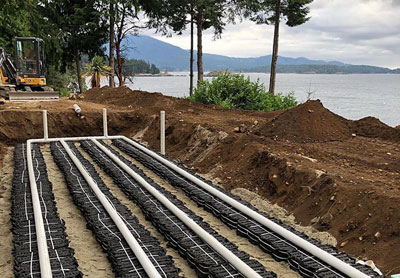 The first step in designing a septic system involves conducting a perc and mantle test to assess the soil conditions. Once we have that information, we move into the design phase. Understanding key components of septic system design can help ensure that your system performs as it should. Every element, from the septic drain field design to the leach field layout, plays an important role in the wastewater treatment process. Let’s go over a brief overview of the key components.
Septic Drain Field Design
The septic drain field design is essential to ensure that wastewater from the septic tank is safely and effectively treated by the soil. A well-designed drain field (also known as a leach field or absorption field) disperses the effluent from the septic tank into the soil, where natural processes filter and purify the water before it returns to the groundwater.
Septic Drain Field Layout
A typical septic system layout involves the following sequence: House → Septic Tank → Distribution Box → 3 Parallel Trenches (Leach Lines) with a Gravel Bed and Perforated Pipes.
Drain Field and Leach Field Design in Detail
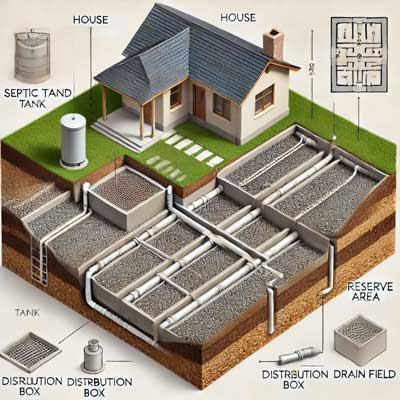 Designing an efficient septic system, particularly the drain field (also known as the leach field), requires careful consideration of how treated wastewater is dispersed and absorbed into the soil. NexGen specializes in creating customized drain field layouts that arrange pipes or chambers underground to evenly distribute wastewater. This process is guided by NexGen’s drain field design principles, ensuring efficient absorption based on soil type and water usage.
The leach field, or septic field, is the designated area where wastewater absorption takes place. NexGen’s septic field design considers critical factors such as size, depth, and pipe placement, all tailored to your property’s specific needs. Their detailed engineering takes into account soil composition, slope, and water tables to optimize system performance.
In rural areas, some may opt for homemade leach field designs using available materials, but NexGen provides professional solutions that ensure compliance and reliability. For properties with limited space, NexGen offers alternative options like leach beds and leach pits, which serve similar functions but are more compact.
Typically, the septic tank is placed near the house with pipes leading to the drain field. The size of the leach field is determined by factors such as soil permeability and household water usage. When traditional fields aren’t viable, NexGen offers alternatives like mound systems or drip irrigation to meet site-specific challenges. With NexGen, each site is thoroughly evaluated to ensure the best wastewater treatment solution is implemented.
A typical Septic Tank and Drain Field Layout.
The leach field is where treated wastewater is dispersed and absorbed into the soil.
Mound systems are used when traditional leach fields are not feasible, such as in areas with high water tables or poor soil conditions.
Leach Beds for Septic Systems.
Mound and Sand Filter Design
NexGen offers advanced filtration solutions with the septic sand filter design system, which uses layers of sand to treat wastewater before safely discharging it into the soil or a leach field. This system is ideal for sites where traditional methods may not be effective. For areas with challenging soil conditions, NexGen provides septic mound design systems, which elevate the septic system above ground level to ensure proper wastewater treatment. Both solutions are engineered to meet specific site requirements, ensuring effective treatment while minimizing environmental impact and maintaining system longevity.
General Layout and Design:
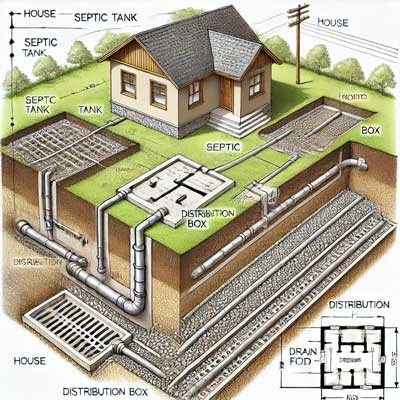 Above, we have covered specific septic system designs. Now, let’s discuss what all types of septic designs generally consist of.
- How to Design a Septic System: This involves planning a septic system, taking into account factors like soil type, water table, and property layout.
- How to Design a Leach Field: This involves designing the area where treated wastewater is dispersed into the soil for further purification.
- Septic System Design Requirements: Local and state regulations dictate how a septic system must be designed and installed.
- General Septic System Design Drawings: These include key components such as the house, septic tank, distribution box, and drain field layout.
Septic Tank Design
Septic tank systems are essential for managing wastewater in areas without centralized sewer systems. Designing a septic tank system involves planning its installation and connection to the leach field, which helps filter and disperse wastewater into the soil. Septic tank designs vary, with options like single-chamber or multi-chamber systems catering to different needs.
In California, septic systems must meet specific regulatory standards to ensure environmental protection. The layout design determines the placement of the septic tank relative to the property and leach field to optimize function and compliance. Styles of septic tanks include concrete, plastic, and fiberglass, each offering different benefits. Innovative septic tank ideas might focus on improving efficiency, reducing environmental impact, or optimizing space. The septic tank drainage field is the area where treated wastewater exits the septic tank and is absorbed into the soil, completing the treatment process.
Learn more in detail about how a septic system tank works.
Why are Leach Lines Important in a septic system?
Leach lines, also known as leach field lines or drain lines, are a crucial component of a septic system responsible for the final treatment and dispersion of wastewater. Here’s a breakdown of each term:
- Leach Septic System or Leach Lines for Septic System:- A leach septic system includes a leach field where wastewater from the septic tank is distributed into the soil. The leach field consists of leach lines, which are individual pipes or perforated tubes buried in trenches filled with gravel or sand. These lines allow the wastewater to flow evenly and percolate through the soil, where it is further treated by natural filtration. This process removes impurities and pathogens before the water returns to the groundwater supply.
- Leach Line for Septic Tank: This specifically refers to the pipes that connect the septic tank to the leach field. The leach lines receive the effluent (treated wastewater) from the septic tank and distribute it over a larger area in the leach field, allowing for further treatment and absorption.
Why is Leach Field Design and Soil Testing Important?
The design of the septic system leach field is critical to the overall effectiveness of the system. A leach field design must account for the property’s wastewater production, soil type, and the results of a percolation (perc) test. This soil test determines how quickly water is absorbed by the soil, influencing the size and layout of the leach field.
In some cases, a chamber leach field may be more appropriate, especially in areas with poor soil conditions. These systems require less space and provide more efficient treatment compared to conventional pipe systems.
Get to know about various Septic System Leach Field Types.
Choosing the Right System for Your Property
Selecting the right septic system is a critical decision. Whether you’re considering a conventional system, an advanced aerobic design, or a custom-engineered solution, NexGen’s expertise can guide you through the process. Our tailored solutions address California’s unique challenges, ensuring that your septic system is both effective and environmentally friendly.
California-Specific Regulations and Considerations
In California, septic system designs must adhere to stringent local regulations to ensure environmental protection and public health. This includes compliance with the California Code of Regulations Title 22 and local health department standards. These regulations address factors such as soil types, water table levels, and wastewater treatment standards, ensuring systems are both effective and environmentally friendly.
NexGen Septics is proficient in navigating California’s regulatory landscape, ensuring that every design meets state and local requirements. Our expertise in managing high water tables, varying soil types, and drought conditions ensures that your septic system is both compliant and optimized for performance.
Regional Environmental Factors
California’s diverse geography presents unique challenges for septic system design. High water tables, varying soil types, and drought conditions are common considerations. For properties with high water tables or poor soil conditions, NexGen offers specialized solutions like mound and sand filter systems. In drought-prone areas, we emphasize efficient wastewater management practices to conserve water and minimize environmental impact.
Case Studies and Local Expertise
NexGen has successfully tackled various California-specific septic system challenges. For example, in a coastal community with high water tables, we designed a mound system that elevated the septic field to ensure effective treatment. In a drought-affected area, our advanced aerobic systems reduced water usage and enhanced treatment efficiency.
Tailored Solutions for California Properties
At NexGen Septics, we understand that California properties have unique needs. Our team provides tailored solutions that not only comply with local regulations but also address specific regional challenges. Whether you need a conventional system, an advanced aerobic system, or a customized engineered solution, NexGen ensures high-quality, reliable, and environmentally friendly septic systems.
Comprehensive Septic System Layout and Design Solutions by NexGen Septics
At NexGen Septics, we offer specialized septic system designs for residential, commercial, and industrial applications. Our expert team is equipped to create tailored solutions that meet the specific demands of each environment, ensuring efficient and compliant waste management systems.
Residential Septic System Design
For homeowners, having a reliable residential septic system design is essential for maintaining a healthy living environment. NexGen Septics provides customized solutions that consider factors such as property size, soil type, and household wastewater production. Whether you need a conventional septic tank or an alternative septic system, our designs are crafted to ensure long-term functionality and minimal environmental impact.
Commercial Septic System Design
Businesses have different needs when it comes to wastewater treatment. Our commercial septic system design services cater to the demands of larger buildings and higher volumes of wastewater. NexGen Septics offers advanced designs, including engineered septic systems and aerobic septic systems, which are ideal for commercial properties with heavy usage. Our systems are designed to handle the complexities of commercial waste while adhering to local regulations and environmental standards.
Industrial Septic System Design
Industrial facilities often produce significant amounts of wastewater, requiring robust and efficient treatment systems. NexGen Septics specializes in industrial septic system design, providing solutions that can handle large-scale waste production. We offer engineered septic systems that incorporate advanced technology and materials to ensure the system’s durability and effectiveness in even the most demanding industrial environments. Our designs are tailored to meet stringent regulatory requirements and to provide reliable, long-term service.
Ready to find the perfect septic system for your needs? Contact NexGen Septics today for a customized solution!
Rebuilding and Upgrading Your Septic System
Over time, septic systems can fail due to soil saturation, bio-clogging, or mechanical failure. When this happens, it’s important to work with a professional septic designer to create an updated septic system design that meets current standards. NexGen specializes in rebuilding and upgrading systems to ensure long-term reliability and environmental safety.
Unsure about when to replace your existing septic system? Get clear answers and expert guidance in our blog.
Conclusion
Choosing the right septic system is crucial for effective waste management and regulatory compliance. Whether you’re designing a new system or upgrading an existing one, NexGen Septics offers expert solutions tailored to your property’s unique needs. From traditional septic tank designs to advanced aerobic systems, we provide comprehensive services for residential, commercial, and industrial properties throughout California. Our goal is to ensure that your septic system is efficient, environmentally friendly, and fully compliant with local regulations. For personalized advice and top-quality septic system solutions, contact NexGen Septics today.